top of page
Art.Ania
The Evolution of Evolution
How did living organisms, in all their amazing (and beautiful) complexity arise? Although evolution is well able to explain increases in complexity over time, the ability to evolve at all seems to depend on genetic and cellular systems that are, themselves, super complex. The solution to this puzzle, I suspect, is that biological evolution itself evolved from a simpler precursor process, chemical evolution, which could spontaneously emerge in many plausible planetary settings. In contrast to conventional chemistry, where outcomes are predictable, chemical evolution requires involves rare chance events, which cause a transition to a new self-sustaining state, playing the same role as mutations in biological evolution. The possibility of chemical evolution is increasingly supported by theory and is being subjected to tests in the laboratory. If we can learn how chemical evolution emerges and how it generates the elements needed to transition to biological evolution, we will not only understand the history of life's appearance on Earth but also gain perspective on other forms of life that might exist elsewhere in the Universe. In contrast to conventional chemistry, where outcomes are predictable, chemical evolution requires that the system.
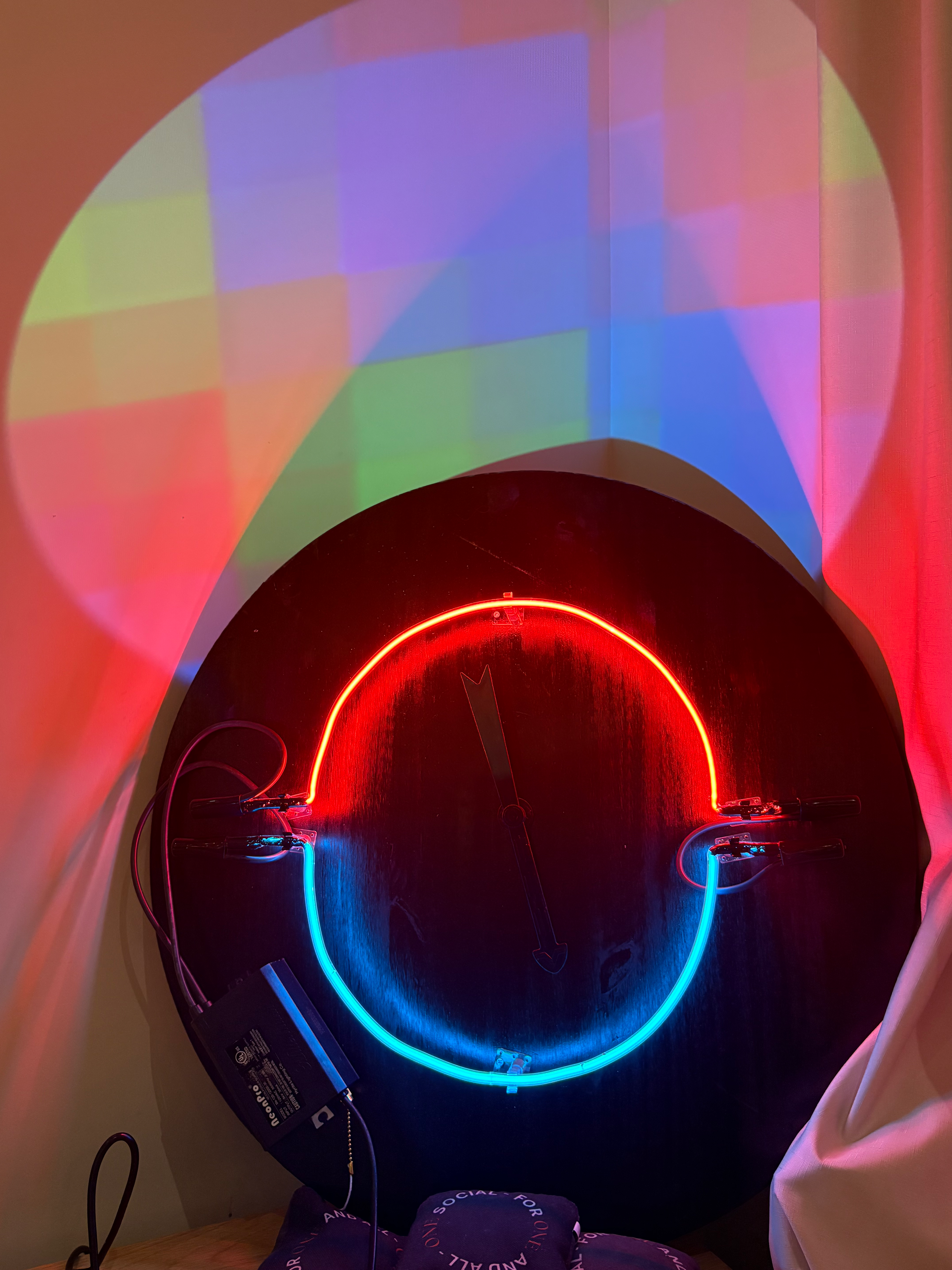
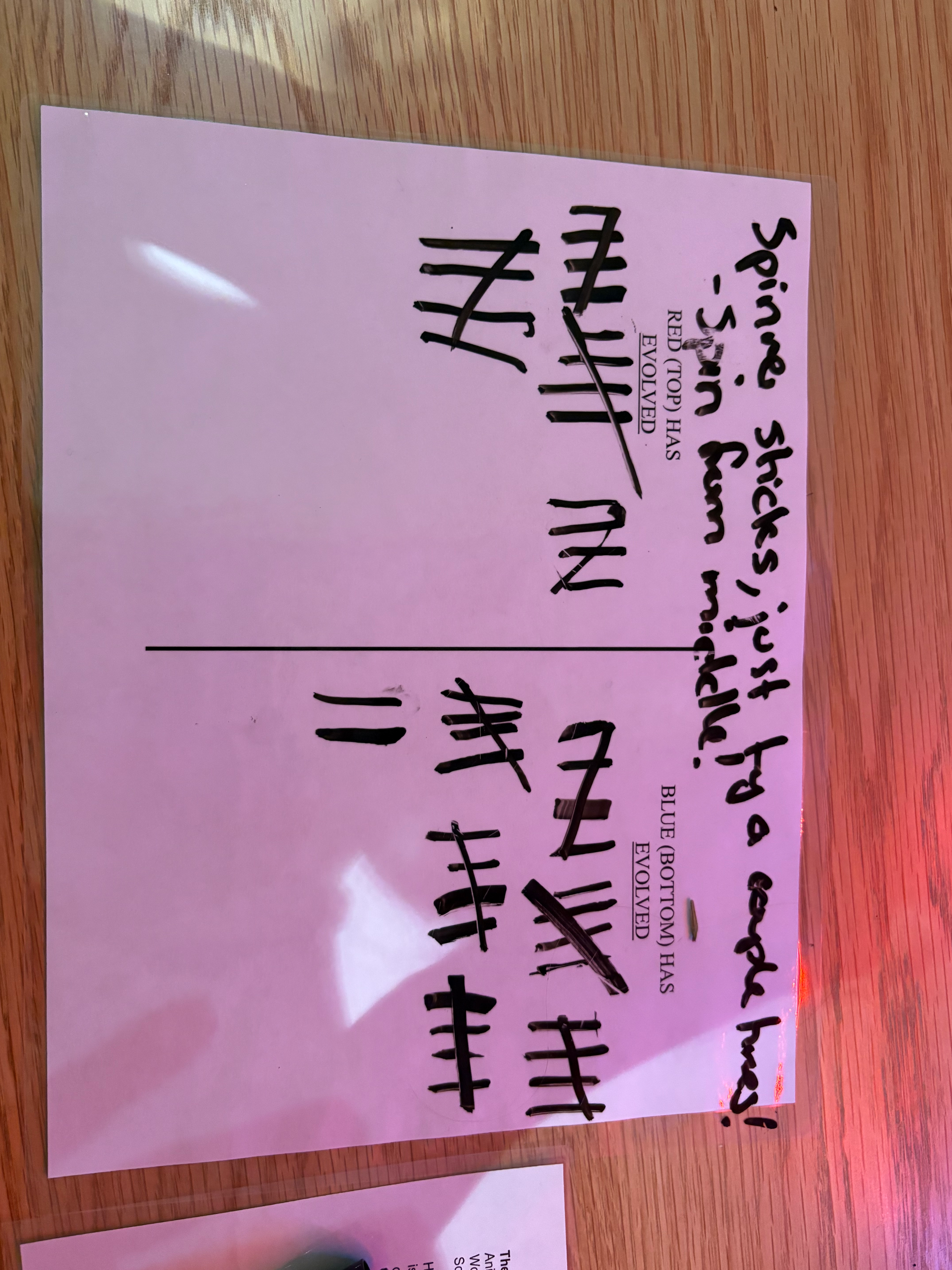
Inspired by the research by Professor David Baum, this piece conceptually represents the randomness that is needed for chemical evolution, which distinguishes it from regular chemistry. Through the accumulation of random changes different parallel chemical systems can diverge from one another over time. This is represented by the tallying process where different version of the experiment can build up a memory of a different series of events.
Project type
Neon
Date
May 2026

01
The Evolution of Evolution


bottom of page